The Bacchae, Euripides’ tragedy of mysticism, ecstasy, and barbarity, will be touring Greece and Cyprus in August and September. The production, directed by Thanos Papakonstantinou, was performed to great acclaim in front of 14,000 theatregoers at the Ancient Theatre of Epidaurus on 2 and 3 August.
Director’s note
Euripides wrote The Bacchae towards the end of his life, in the late 5th century BC. In it, he brings back to the stage the god Dionysus, the founder of the genre. The god of the theatre, of otherness, of dismemberment and amalgamation, of happiness and disaster, sets in motion a game that Euripides ends with an abandoned body that has been torn apart.
If what is torn apart on stage is the acceptance of otherness, does this mean that through a rite of passage, a collective act, we have lost the prospect of being open to the Other, our own and the world’s? Will our pieces never be put together again? Are we condemned, like Pentheus, to live hemmed in within our well-fortified individuality, or else to be dismembered? Are there no longer bridges to connect us with one another, with the Other, with the otherness of our feelings, our ideas, our innermost thoughts, with the absurdity within us, with the absurdity of the world? Only in our skin is there safety. Anything either completely outside us, or completely inside us, will forever remain foreign, inviolable, unspoken, unknown, and will therefore be met with violence. Is violence the only language we can understand? A violence that is closed, impenetrable and absolute, a violence that is not open to any kind of initiation to be unlocked, understood, endured. The avalanche of images on the internet, the natural disasters, the bombs, the mutilated bodies and dead children in the media, the dead and soulless selfies, the uncontrolled flows of data, people, products – can we no longer bear spirituality, transcendence, uplift, because the only god we can understand is the god of the old covenant, the vengeful god, the punitive god? Is that who we deserve?
Or is the dismembered body at the same time a puzzle that can be completed, a construct that shows us its parts, a spectacle? And is it up to us, the audience, whether and how to assemble it?
Οι Βάκχες του Ευριπίδη, σε σκηνοθεσία Θάνου Παπακωνσταντίνου, η τραγωδία του μυστικισμού, της έκστασης και της βαρβαρότητας, μετά τη θερμότατη υποδοχή τους από 14.000 θεατές στο Αρχαίο Θέατρο Επιδαύρου στις 2 και 3 Αυγούστου, περιοδεύουν τον Αύγουστο και τον Σεπτέμβριο στην Ελλάδα και την Κύπρο.
Σκηνοθετικό σημείωμα
Ο Ευριπίδης γράφει τις Βάκχες στο τέλος του 5ου π.Χ. αι. και της ζωής του. Εκεί ξαναφέρνει στη σκηνή τον θεό Διόνυσο, τον ιδρυτή του είδους. Ο θεός του θεάτρου, της ετερότητας, του διαμελισμού και της συγχώνευσης, της ευδαιμονίας και της καταστροφής, στήνει ένα παιχνίδι που ο Ευριπίδης θέλησε να τελειώσει με ένα διαμελισμένο σώμα που δεν θα μαζέψει κανείς.
Αν αυτό που διαμελίζεται επί σκηνής είναι το άνοιγμα στην ετερότητα, αυτό σημαίνει άραγε ότι έχει πια χαθεί για εμάς η προοπτική, μέσα από μια μύηση, μια πράξη συλλογική, να ανοίξουμε στο Άλλο, το δικό μας και του κόσμου; Τα κομμάτια μας δεν θα συνδεθούν ποτέ ξανά; Είμαστε καταδικασμένοι, όπως ο Πενθέας, να ζούμε περίκλειστοι στην καλά οχυρωμένη ατομικότητά μας, αλλιώς θα διαμελισθούμε; Δεν υπάρχουν πια οι γέφυρες που θα μας ενώσουν τον έναν με τον άλλο, με το Άλλο, με την ετερότητα των αισθημάτων, των ιδεών, των μύχιων σκέψεών μας, με το παράλογο μέσα μας, με το παράλογο του κόσμου; Μόνο μέσα από το δέρμα μας υπάρχει ασφάλεια. Ό,τι βρίσκεται είτε εντελώς έξω από εμάς, είτε εντελώς μέσα μας, θα παραμείνει για πάντα ξένο, απαραβίαστο, ανομολόγητο, άγνωστο, και για τον λόγο αυτό θα αντιμετωπιστεί με τη βία. Η βία είναι η μόνη γλώσσα που μπορούμε να καταλάβουμε; Μια βία κλειστή, αδιαπέραστη και απόλυτη, μια βία που δεν επιδέχεται κανενός είδους μύηση για να την ξεκλειδώσουμε, για να την καταλάβουμε, για να την αντέξουμε. Ο καταιγισμός των εικόνων στο διαδίκτυο, οι φυσικές καταστροφές, οι βόμβες, τα ακρωτηριασμένα σώματα και τα νεκρά παιδιά στα media, οι άψυχες και νεκρές selfie, οι ανεξέλεγκτες ροές δεδομένων, ανθρώπων, προϊόντων – άραγε δεν αντέχουμε πια την πνευματικότητα, την υπερβατικότητα, την ανάταση, επειδή ο μόνος θεός που μπορούμε να καταλάβουμε είναι ο θεός της παλαιάς διαθήκης, ο θεός εκδικητής, ο θεός τιμωρός; Αυτός είναι που μας αξίζει;
Ή μήπως το διαμελισμένο σώμα είναι ταυτόχρονα ένα παζλ που μπορεί να συμπληρωθεί, είναι μια κατασκευή που μας δείχνει τα μέλη της, ένα θέαμα; Και εξαρτάται από εμάς, τους θεατές, αν και πώς θα το συναρμολογήσουμε;
National Theatre of Greece Official Website
Photos by Elina Giounanli
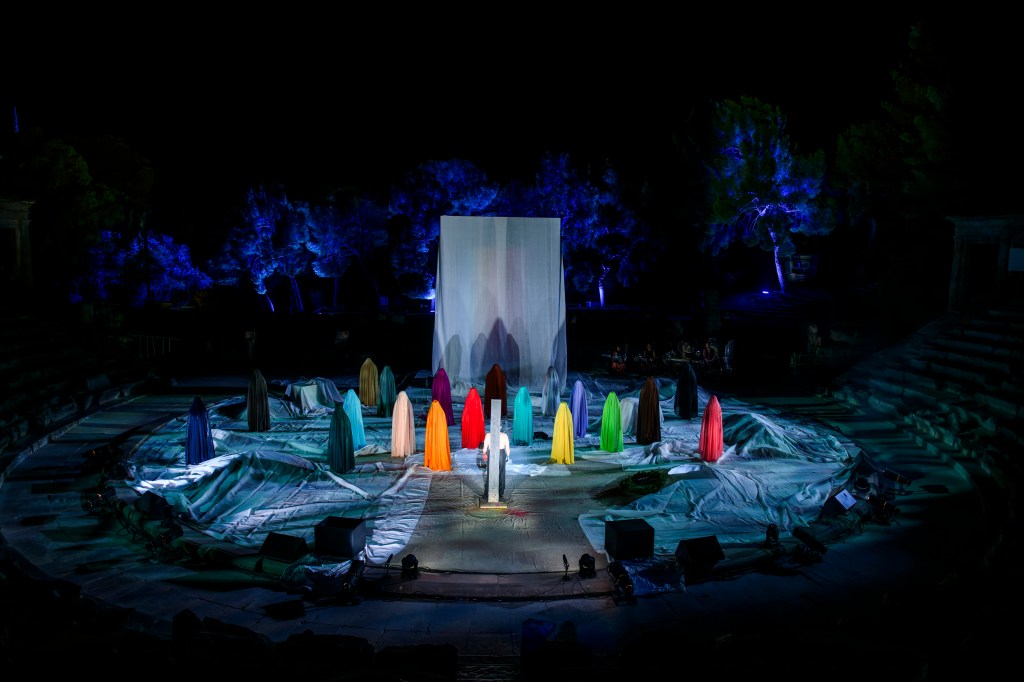
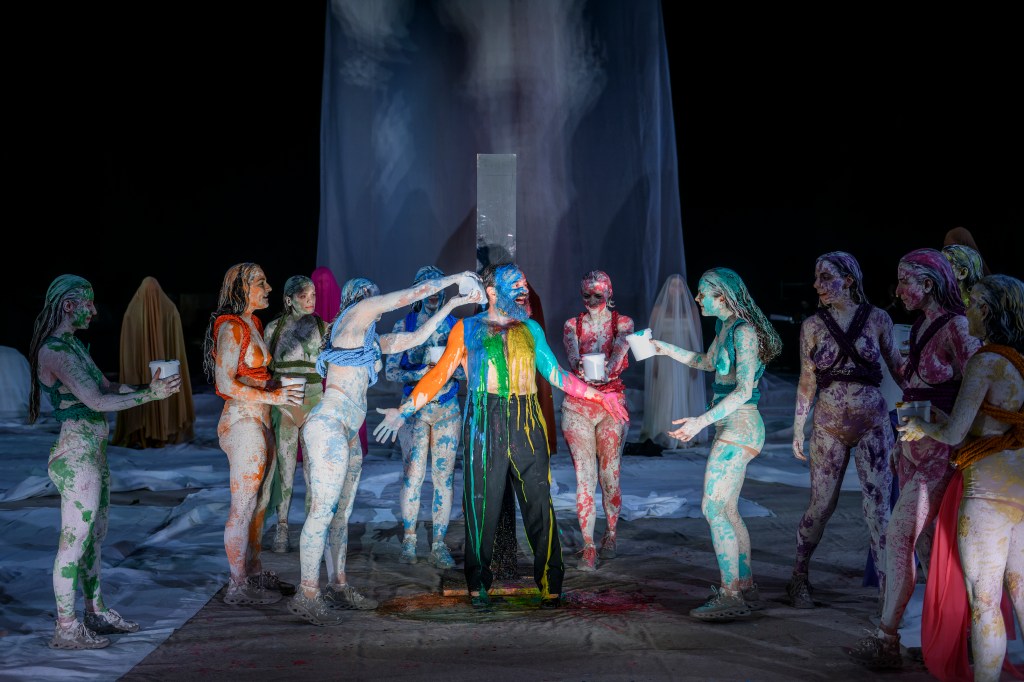

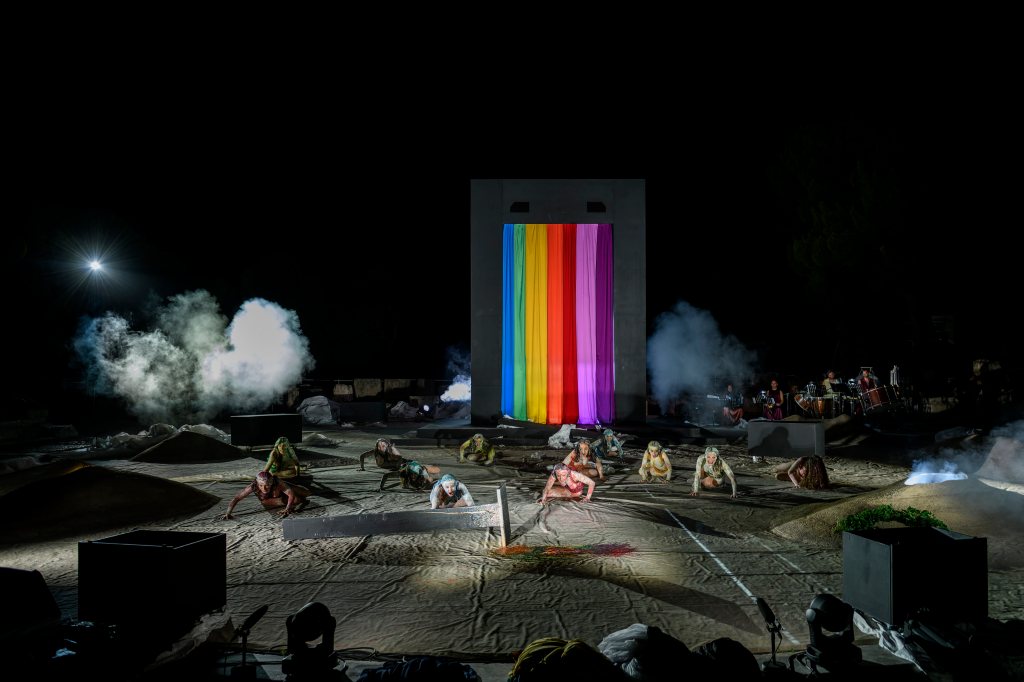
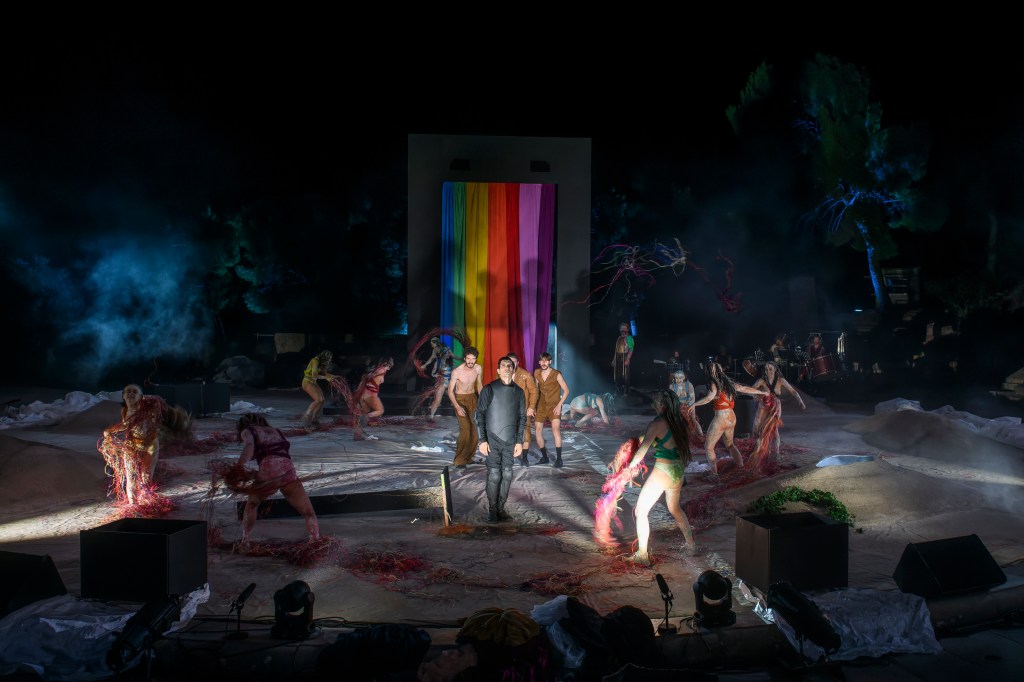
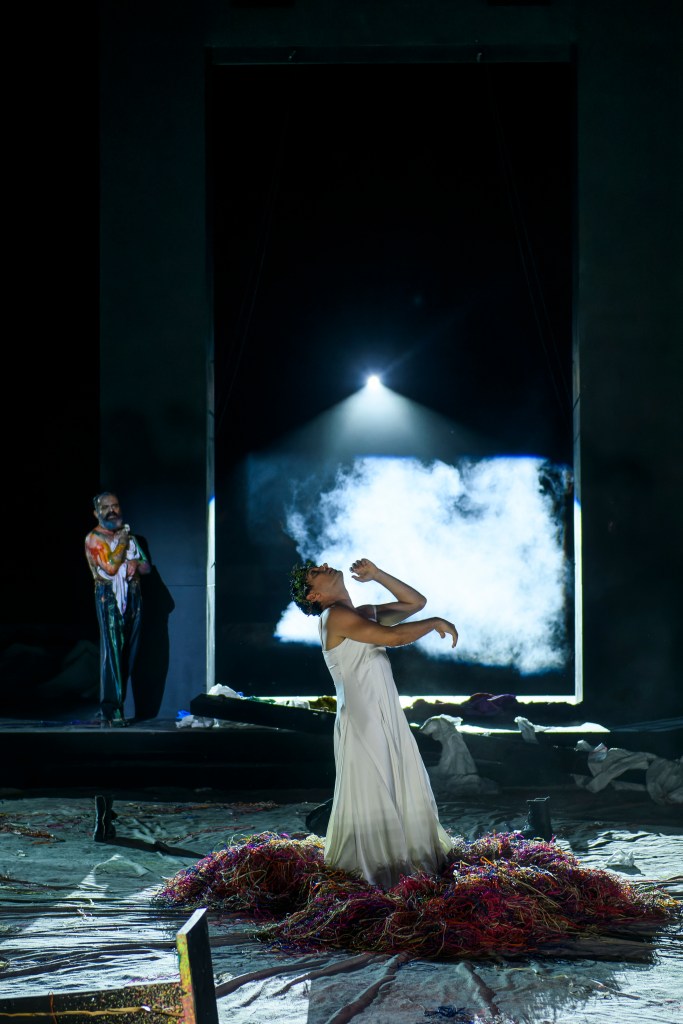


National Theatre of Greece – Athens Epidaurus Festival 2024, Ancient Theatre of Epidaurus
Directed by Thanos Papakonstantinou
Dramaturgy: Ioanna Remediaki
Set design – Costumes: Niki Psychogiou
Original Music: Dimitris Skyllas
Choreography: Nanti Gogoulou
Lighting Design: Christina Thanasoula
Musical Coaching: Melina Paionidou, Dimitris Skyllas
Dramaturg for the performance: Eri Kyrgia
Assistant to the Director: Fanis Sakellariou
Assistant to Set Designer: Yannis Setzas
2nd Assistant to Set Designer: Zoe Kelesi
Assistant to Costume Designer: Penelope Hansen
Cast
Konstadinos Avarikiotis (Dionysus), Marianna Dimitriou (Tiresias), Alexia Kaltsiki (Agave), Themis Panou (Cadmus), Argyris Pandazaras (Pentheus)
Messengers Giannis Koravos, Dionysis Pifeas, Fotis Stratigos
Chorus
Margarita Alexiadi, Eirini Boudali, Chrissianna Karameri, Eleni Koutsioumpa, Maria Konstanta, Kleopatra Markou, Eleni Moleski, Georgina Paleothodorou, Iokasti-Agave Papanikolaou, Thaleia Stamatelou, Danae Tikou, Stellina Vogiatzi
Musicians: Thodoris Vazakas, Maria Deli, Alexandros Ioannou, Yiannis Kaikis
 Fanis Sakellariou